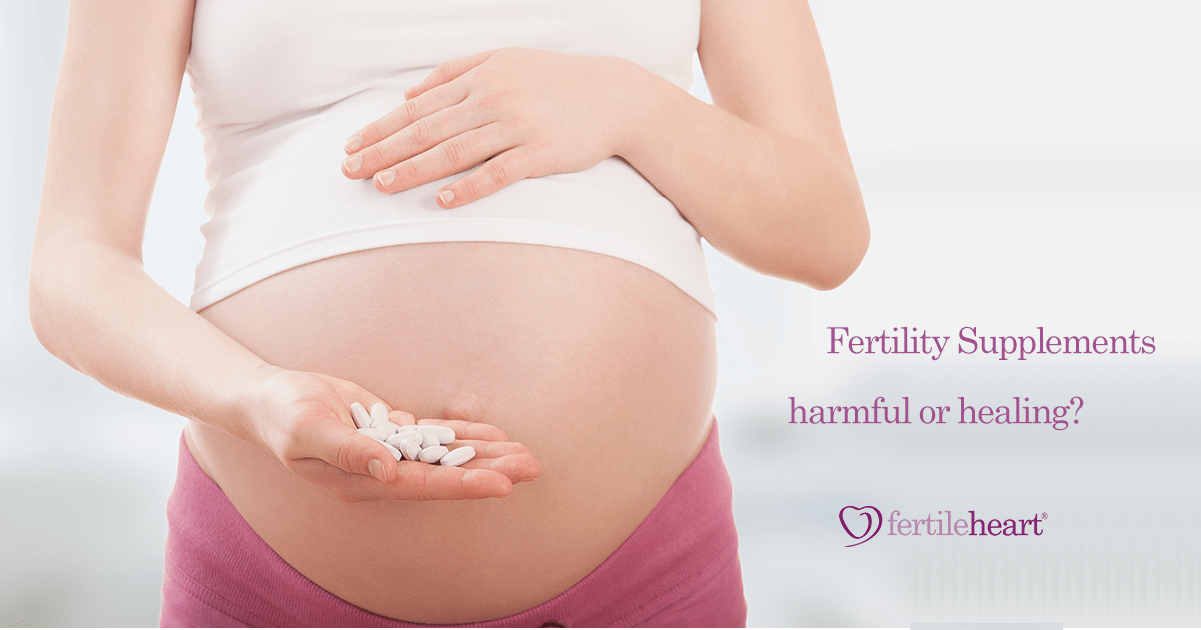
Fertility Supplements: Harmful or Healing?
After years of spending a fortune on assorted fertility supplements; boxes filled with tinctures and vitamins without a baby to show for it, many of my clients wonder whether fertility supplements can make any measurable difference in their chances of getting pregnant and staying pregnant.
“Can fertility supplements really make any difference?” they ask. “Could taking supplements to increase my fertility actually have the opposite effect? Instead of increasing my chances of getting pregnant, could it possibly harm me?”
The answer to both of those questions is YES!
This page is about making sure that the supplements you’re taking are making a difference.
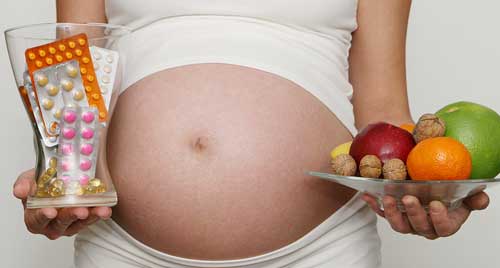
DON’ts:
• Don’t mix and match.
To function at its best, the body needs a number of different compounds that work synergistically. Taking a supplement developed by a qualified scientist removes the guesswork from the questions of how much of each compound works best together.
• Don’t use compounds that target specific hormones.
Specific hormones should only be targeted with great caution, under the supervision of a qualified healthcare provider specializing in infertility. Over the last decade, a number of fertility supplement formulations with strong hormonal properties have been touted as fertility boosters. Too often I have seen these formulas, even when prescribed by seasoned practitioners. wreak havoc on women’s hormonal balance. When recommending supplements I aim for `products aligned with the Fertile Heart™ philosophy because they focus not on specific hormone levels, but on increasing overall health and energy while enhancing endocrine function.
• Don’t take a supplement containing iron if you have highly irregular menstrual cycles.
Supplements that are formulated without iron for maximum safety are particularly useful for women who experience irregular menstrual cycles, since periodic blood loss in women who menstruate regularly protects from excessive iron buildup.
If your cycles are regular, you can use a high quality Prenatals. Be sure to ingest them with food rich in vitamin C, to aid in absorption of iron. It’s also important to get adequate amount of protein from food (2.5 ounces of protein daily from meat, fish, eggs, tempeh, or other meat substitutes, lentils, beans, quinoa, or nuts and seeds).
DO’s:
• Do choose a high-quality product with pure and potent ingredients.
Use products with quality systems modeled after pharmaceutical Good Manufacturing Practices (GMP), which are generally higher than nutritional product manufacturers are required to meet. Iit always surprises me when women are willing to spend tens of thousands of dollars on IVF, and then go to a big-box store to get a generic fertility or prenatal supplement. •
Do choose a supplement that is easily absorbed.
The US Pharmacopoeia manufacturing guidelines suggest that in order to be effective, any supplement tablet should break apart in 30 to 60 minutes. Choose supplements in their most bioavailable form which dissolve in water within 20 minutes.
• Do take supplements with food.
Fertility supplements are considered nutrients and are best assimilated when taken with food. Ideally, take them with a complete meal containing protein, fiber, carbs, and fat. Fat is especially important for the absorption of fat-soluble nutrients including vitamins D and E.
• Do drink eight to ten glasses of water daily.
This helps cells maintain their balance of fluids and electrolytes, energizes, muscles, and helps the kidneys rid the body of toxins. It also helps maintain bowel function.
• Do include plenty of fiber with your meals.
Optimally you should be having three bowel movements a day.
• Do support your male partner in taking their supplements as well.
For Specific Brand Recommendations and additional Dos and Don’ts of fertility supplementation see: Fertility Supplements: Fertile Heart Choice and Fertility Supplements: How and Why: Safety above All